Guayo - instrument
El guayo es un rallador metálico utilizado en la música folklórica y popular cubana, asociado principalmente al changüí y al son temprano de la región de Guantánamo, en el oriente de Cuba.
Qué es
El guayo es esencialmente un rallador de cocina cilíndrico — el mismo que se usa para rallar alimentos — que se raspa rítmicamente con una varilla metálica, un tenedor o un palillo. Produce un sonido seco, rasposo y metálico que se distingue claramente dentro del conjunto.
Es el equivalente metálico del güiro de madera y produce un timbre más áspero y percutivo.
Orígenes
El guayo surgió en el oriente rural de Cuba, donde campesinos y obreros reconvirtieron objetos domésticos en instrumentos. Ocupa un lugar central en el changüí, el pariente más antiguo conocido del son, proveniente de la provincia de Guantánamo.
Rol en la música
En el changüí, el guayo aporta una capa rítmica constante junto al tres, el bongo, la marímbula o el bajo, y las maracas. Cumple el papel que el güiro desempeña en la charanga: textura rítmica continua y mantenimiento del groove.
A medida que el son se desplazó hacia el oeste, hacia La Habana, y se fue urbanizando, el guayo metálico fue sustituido en gran medida por el güiro de madera en los conjuntos de estilo charanga. Sin embargo, en el changüí auténtico y en el son tradicional del oriente cubano, el guayo sigue siendo el raspador de elección.
El guayo no se utiliza habitualmente en las orquestas de timba modernas, pero su legado está presente: su papel de raspado rítmico ha sido absorbido por la sección de percusión contemporánea, y su sonido aún puede escucharse en grabaciones que hacen referencia a las raíces del oriente cubano.
El danzón fue el primer baile nacional de Cuba — la forma que unificó la identidad de la música popular cubana a finales del siglo XIX y principios del XX, y el antepasado del mambo, el cha-cha-chá y, en última instancia, la timba.
Lees meer >Timba is the music this site is dedicated to exploring. It emerged as a distinct genre in the late 1980s and crystallized in the early 1990s — born in a moment of social crisis, built on the full accumulated history of Cuban music, and still evolving today.
Lees meer >Antes del son, antes del danzón, antes de cualquier género con nombre — existían el Nengón y el Changüí en las montañas y valles del oriente cubano (Oriente, especialmente la provincia de Guantánamo). Estas son las raíces más antiguas que sobreviven de la música popular cubana.
Lees meer >Cuba is the largest island in the Caribbean and the birthplace of some of the world's most influential music and dance traditions. African, Spanish, and French cultural streams collided here over centuries of colonial history, producing an extraordinary creative culture that exported itself across the globe.
Lees meer >The Casa de la Trova in Santiago de Cuba is the spiritual home of Cuban traditional music — Son, Bolero, Changüí, and Trova. Founded in 1968 on Calle Heredia in the heart of Santiago's historic center, it has been the gathering place for the city's musicians for over half a century.
Lees meer >Oriente, the eastern region of Cuba, is the cradle of vibrant music and dance traditions like Son, Changüí, Nengón, and Kiribá, which shaped the roots of Cuban and Latin music.
Lees meer >
El bongo es un par de tambores pequeños de fondo abierto que se toca con los dedos y las palmas. Se originó en el oriente de Cuba y se convirtió en una de las voces percutivas definitorias del son y la timba.
Lees meer >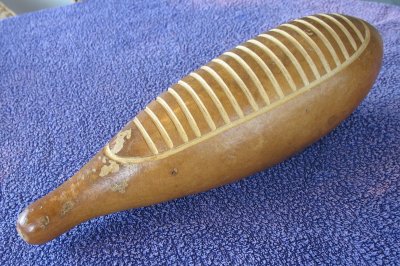
El güiro es una calabaza con muescas que se raspa con un palillo o un tenedor para producir un sonido rasposo y rítmico. Es un elemento habitual de las orquestas de charanga y ocupa un lugar central en el danzón, el cha-cha-chá, el son y la salsa.
Lees meer >
La marímbula es un instrumento de bajo afrocubano derivado de los lamelófonos africanos (pianos de pulgar). Proporcionaba la voz de bajo en los primeros conjuntos de son antes de ser reemplazada por el contrabajo.
Lees meer >
El tres es un instrumento cubano parecido a la guitarra, con tres pares (coros) de cuerdas. Es el instrumento melódico-rítmico definitorio del son cubano y sus géneros predecesores.
Lees meer >Un género de música popular bailable cubana que surgió en los años 1980–90
- Surgió en los años 1980–90
- Influenciado por el songo, la rumba, el funk, el blues, el jazz, el pop, el rock y los ritmos afrocubanos.
- Conocido por sus complejos cambios de ritmo, líneas de bajo agresivas y alta energía que impulsan a los bailadores a improvisar.
Lees meer >