Cha-Cha-Cha - rhythm
El cha-cha-chá es un ritmo de música y baile cubano creado en 1953 por el violinista y compositor Enrique Jorrín mientras actuaba con la Orquesta América, un conjunto charanguero con sede en La Habana. Se convirtió en uno de los mayores éxitos de exportación de la música cubana del siglo XX, difundiéndose rápidamente por toda América Latina, Europa y América del Norte.
Origen
El cha-cha-chá creció directamente del danzón-mambo, el estilo rítmicamente innovador que Antonio Arcaño, Orestes López e Israel "Cachao" López habían desarrollado a finales de la década de 1940. Jorrín observó que los bailadores tenían dificultades con la complejidad sincopada del mambo — la sección de montuno final, improvisada y fuertemente sincopada, exigía una sofisticación rítmica real a bailadores acostumbrados al danzón, mucho más pausado.
Su solución fue reducir ligeramente el tempo y desplazar el acento rítmico para crear un pulso más limpio y audible que los bailadores pudieran seguir sin necesitar entrenamiento especializado. La figura rítmica de tres notas que caía en el cuarto tiempo y en el "y" de cuatro producía un sonido de arrastre que el público comenzó a vocalizar como "cha-cha-chá" mientras bailaba.
La composición de Jorrín "La Engañadora" (1953) es considerada el primer cha-cha-chá verdadero. Su éxito con los bailadores en los clubs Tropicana y La Paloma de La Habana confirmó que el nuevo ritmo tenía un atractivo masivo.
El Patrón Rítmico
El rasgo definitorio del ritmo del cha-cha-chá es la figura "cha-cha-chá" que cae al final de cada frase de dos tiempos. En 4/4, el sentimiento básico es:
- Tiempo 1: paso
- Tiempo 2: paso
- Tiempo 3: paso
- Tiempos 4-y-1: cha – cha – chá ( tres notas rápidas que cierran la frase)
Esto crea un ritmo parejo y accesible que cae claramente en los tiempos fuertes, mientras la característica figura "cha-cha-chá" le da a la música su rebote juguetón y característico. Comparado con el impulso sincopado y motriz del mambo, el cha-cha-chá se siente mesurado y conversacional.
Los timbales desempeñan un papel central al marcar este patrón. La cáscara (golpeando el cuerpo de los timbales en lugar del parche) mantiene un sentimiento de corcheas constante, mientras que los golpes abiertos de timbal puntualizan la figura "cha-cha-chá". El güiro (una calabaza estriada que se raspa rítmicamente) proporciona una subdivisión continua de semicorcheas que cohesiona el groove.
El cha-cha-chá es inseparable del formato charanga. La instrumentación estándar de la charanga — flauta, dos o más violines, piano, bajo, timbales, güiro y voces — le da al ritmo su sonido característico:
- La flauta lleva la línea melódica principal e improvisa en el registro agudo.
- Los violines tocan figuras rítmicas armonizadas (guajeos) que le dan a la sección rítmica una calidad camerística ausente en los conjuntos de metales predominantes.
- El piano acompaña con un patrón ligero en el contratiempo que complementa la flauta y las cuerdas.
- El bajo toca un tumbao que perfila la armonía sin el pesado punch grave de los estilos posteriores.
- El güiro es rítmicamente esencial — su patrón de raspado continuo es una de las firmas sonoras del cha-cha-chá.
La ligereza y elegancia de la orquestación charanguera encajó perfectamente con el cha-cha-chá. El sonido era lo suficientemente refinado para los salones de baile selectos de La Habana y al mismo tiempo lo suficientemente accesible rítmicamente como para atraer a bailadores sociales de todos los orígenes.
Relación con el Baile
El cha-cha-chá dio origen a un baile social específico con el mismo nombre. Los bailadores dan tres pasos en los tiempos 4-y-1 — el "shuffle" del cha-cha-chá — y dos cambios de peso en los tiempos 2 y 3. Esta estructura sencilla lo hacía mucho más accesible que el mambo o el danzón.
El baile se realiza con la pareja enfrentada en posición cerrada o abierta, moviéndose con un juego de pies contenido y ordenado. No hay voleos dramáticos ni secuencias de giros elaboradas por defecto — el énfasis está en el tiempo limpio, el trabajo de pies ligero y la interacción juguetona entre compañeros.
Como el pulso es tan claro y los pasos tan lógicos, el cha-cha-chá se convirtió en la puerta de entrada al baile cubano para millones de bailadores sociales en todo el mundo. En Cuba, sigue siendo un estándar en cualquier noche de baile junto al son y el casino.
Cómo se Diferencia del Mambo y el Danzón
| Característica |
Danzón |
Mambo |
Cha-cha-chá |
| Tempo |
Lento a moderado |
Rápido, impulsor |
Moderado |
| Carácter |
Elegante, contenido |
Sincopado, agresivo |
Juguetón, accesible |
| Complejidad del baile |
Alta (para su época) |
Alta |
Baja a media |
| Acento rítmico |
En el tiempo, formal |
Fuertemente sincopado |
Claro, con figura cha-cha-chá |
| Conjunto típico |
Charanga / orquesta típica |
Big band o conjunto |
Charanga |
El danzón es el ancestro solemne — formal, en su mayor parte instrumental, con secciones alternadas y la convención de descanso para las parejas. El mambo tomó la sección final improvisada del danzón y la cargó de potencia con metales, percusión y armonías de jazz. El cha-cha-chá conservó la elegante instrumentación de la charanga, pero hizo el ritmo transparente y amigable para el cuerpo.
Grabaciones Clave
- Enrique Jorrín / Orquesta América – La Engañadora (1953) — la grabación fundacional
- Orquesta Aragón – El Bodeguero — el cha-cha-chá más famoso internacionalmente
- Fajardo y Sus Estrellas – ejemplar charanga de cha-cha-chá de los años 50
- Xavier Cugat — introdujo el ritmo al público norteamericano
El danzón fue el primer baile nacional de Cuba — la forma que unificó la identidad de la música popular cubana a finales del siglo XIX y principios del XX, y el antepasado del mambo, el cha-cha-chá y, en última instancia, la timba.
Lees meer >El danzón fue el primer baile nacional de Cuba — la forma que unificó la identidad de la música popular cubana a finales del siglo XIX y principios del XX, y el antepasado del mambo, el cha-cha-chá y, en última instancia, la timba.
Lees meer >El cha-cha-chá nació de una simple observación: los bailarines tenían dificultades para seguir el mambo. Su creador les dio un ritmo que podían sentir en los pies — y el resultado se convirtió en uno de los estilos musicales más bailados de la historia.
Lees meer >El Casino es el baile de pareja cubano nacido en los clubes sociales (casinos deportivos) de La Habana en la década de 1950. Es lo que los cubanos llaman su propio baile social — distinto de, y anterior a, lo que el resto del mundo llama "salsa".
Lees meer > Cuba is the largest island in the Caribbean and the birthplace of some of the world's most influential music and dance traditions. African, Spanish, and French cultural streams collided here over centuries of colonial history, producing an extraordinary creative culture that exported itself across the globe.
Lees meer >The Tropicana is Havana's most famous cabaret and one of the great entertainment venues of the 20th century. Opened in 1939 in the Marianao neighborhood, it became a symbol of Cuban showmanship — elaborate choreography, live orchestras, and spectacular staging performed under an open-air canopy of trees.
Lees meer >
La clave es un patrón rítmico fundamental y principio organizador de la música cubana. Funciona tanto como patrón musical como concepto rector, profundamente arraigado en las tradiciones afrocubanas.
Lees meer >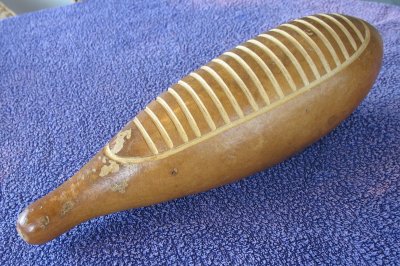
El güiro es una calabaza con muescas que se raspa con un palillo o un tenedor para producir un sonido rasposo y rítmico. Es un elemento habitual de las orquestas de charanga y ocupa un lugar central en el danzón, el cha-cha-chá, el son y la salsa.
Lees meer >Los timbales ( pailas criollas) son un par de tambores poco profundos con casco metálico montados sobre un soporte y tocados con baquetas de madera. Son el motor rítmico de las orquestas de charanga y desempeñan un papel fundamental en la timba.
Lees meer >
El tres es un instrumento cubano parecido a la guitarra, con tres pares (coros) de cuerdas. Es el instrumento melódico-rítmico definitorio del son cubano y sus géneros predecesores.
Lees meer >El piano es el corazón armónico y rítmico de la música popular cubana. En la timba, es uno de los instrumentos más exigentes y expresivos del conjunto.
Lees meer >El piano es el corazón armónico y rítmico de la música popular cubana. En la timba, es uno de los instrumentos más exigentes y expresivos del conjunto.
Lees meer >El piano es el corazón armónico y rítmico de la música popular cubana. En la timba, es uno de los instrumentos más exigentes y expresivos del conjunto.
Lees meer >Mambo
En la música cubana, especialmente en la salsa y el son,
la sección de "mambo" generalmente se refiere a una pausa instrumental intensa y rítmicamente potente,
que a menudo presenta líneas de metales repetitivas, patrones de call-and-response y energía que va aumentando hacia el clímax de una canción.
The Casa de la Trova in Santiago de Cuba is the spiritual home of Cuban traditional music — Son, Bolero, Changüí, and Trova. Founded in 1968 on Calle Heredia in the heart of Santiago's historic center, it has been the gathering place for the city's musicians for over half a century.
Lees meer >Montuno
La cencerro ( campana)
🛎️ 1. Rol general de la campana
🎹 2. Sección de Montuno
El montuno es la sección de call-and-response hacia el final de una pieza de salsa o son, donde todo se abre rítmicamente.
- El patrón de campana se vuelve estable y propulsor, a menudo el patrón de "campana de salsa":
(Golpes en 1, el "&" del 2, 4 y el "&" del 4)
- El bongocero cambia de los tambores de mano a la campana en este punto.
- La campana marca el tiempo sobre la clave y apoya el patrón de piano del montuno, el tumbao del bajo y los riffs de metales.
Así:
🕐 Campana = marcador de tiempo
🎹 Piano = síncopa
🎺 Metales/voces = call & response
- Literalmente "marcha abajo" — esta sección es más calmada, generalmente antes del montuno.
- La campana normalmente no se toca aquí.
En cambio, se escuchan principalmente congas, bongós y timbales en instrumentos más suaves como la cáscara (patrón en el aro del timbal).
- El ritmo es más sutil, dejando espacio para la voz o el contenido melódico.
Así:
En marcha abajo, la campana descansa o toca suavemente (si acaso), y el énfasis rítmico recae en la cáscara o el bongó martillo.
- "Marcha arriba" — significa que el groove se intensifica.
- La campana entra con fuerza, marcando el pulso principal.
- El timbalero suele tocar la campana grande ( campana), mientras que el bongocero puede tocar la campana más pequeña para contraste.
- Esta sección trata de energía e impulso — el clímax del baile.
Así:
En marcha arriba, la campana lidera la sección rítmica, sincronizándose con el bajo y la clave para impulsar la música hacia adelante.
🧭 Tabla resumen
| Sección |
Quien toca la campana |
Función |
Patrón típico |
Energía |
| Marcha abajo |
Normalmente silenciosa o suave (cáscara en su lugar) |
Mantiene el groove sutil |
Cáscara en timbales |
Bajo–Medio |
| Montuno |
Bongocero ( campana pequeña) |
Mantiene la línea de tiempo del montuno |
Patrón de campana de salsa |
Medio–Alto |
| Marcha arriba |
Timbalero ( campana grande) |
Impulsa el ritmo, energía pico |
Campana de salsa (más fuerte, más pesada) |
Alto |
¿Quieres que añada notación rítmica (en alineación de clave 2–3 y 3–2) para el patrón de campana de cada sección? Eso puede facilitar la visualización de cómo encaja con el resto de la sección rítmica.
The Casa de la Trova in Santiago de Cuba is the spiritual home of Cuban traditional music — Son, Bolero, Changüí, and Trova. Founded in 1968 on Calle Heredia in the heart of Santiago's historic center, it has been the gathering place for the city's musicians for over half a century.
Lees meer >
La conga (también llamada tumbadora) es el tambor de mano principal de la música cubana y la columna vertebral rítmica de la timba, el son, la rumba y la salsa.
Lees meer >
El bongo es un par de tambores pequeños de fondo abierto que se toca con los dedos y las palmas. Se originó en el oriente de Cuba y se convirtió en una de las voces percutivas definitorias del son y la timba.
Lees meer >
El bongo es un par de tambores pequeños de fondo abierto que se toca con los dedos y las palmas. Se originó en el oriente de Cuba y se convirtió en una de las voces percutivas definitorias del son y la timba.
Lees meer >
Cómo bailar con la Campana (Cowbell)
En la timba y el songo cubanos, la campana (cowbell) no es solo un ritmo — es un sistema de comunicación entre la banda y los bailarines.
Lees meer >
La clave es un patrón rítmico fundamental y principio organizador de la música cubana. Funciona tanto como patrón musical como concepto rector, profundamente arraigado en las tradiciones afrocubanas.
Lees meer >Los timbales ( pailas criollas) son un par de tambores poco profundos con casco metálico montados sobre un soporte y tocados con baquetas de madera. Son el motor rítmico de las orquestas de charanga y desempeñan un papel fundamental en la timba.
Lees meer >El piano es el corazón armónico y rítmico de la música popular cubana. En la timba, es uno de los instrumentos más exigentes y expresivos del conjunto.
Lees meer >El piano es el corazón armónico y rítmico de la música popular cubana. En la timba, es uno de los instrumentos más exigentes y expresivos del conjunto.
Lees meer >Los términos "marcha abajo" y "marcha arriba" describen diferentes niveles de energía o secciones dentro del montuno.
Lees meer >The terms "marcha abajo" and "marcha arriba" describe different energy levels or sections within the montuno.
Lees meer >Montuno
La cencerro (campana)
🛎️ 1. Rol general de la campana
🎹 2. Sección de Montuno
El montuno es la sección de call-and-response hacia el final de una pieza de salsa o son, donde todo se abre rítmicamente.
- El patrón de campana se vuelve estable y propulsor, a menudo el patrón de "campana de salsa":
(Golpes en 1, el "&" del 2, 4 y el "&" del 4)
- El bongocero cambia de los tambores de mano a la campana en este punto.
- La campana marca el tiempo sobre la clave y apoya el patrón de piano del montuno, el tumbao del bajo y los riffs de metales.
Así:
🕐 Campana = marcador de tiempo
🎹 Piano = síncopa
🎺 Metales/voces = call & response
🔻 3. Marcha Abajo (sección baja)
- Literalmente "marcha abajo" — esta sección es más calmada, generalmente antes del montuno.
- La campana normalmente no se toca aquí.
En cambio, se escuchan principalmente congas, bongós y timbales en instrumentos más suaves como la cáscara (patrón en el aro del timbal).
- El ritmo es más sutil, dejando espacio para la voz o el contenido melódico.
Así:
En marcha abajo, la campana descansa o toca suavemente (si acaso), y el énfasis rítmico recae en la cáscara o el bongó martillo.
🔺 4. Marcha Arriba (sección alta)
- "Marcha arriba" — significa que el groove se intensifica.
- La campana entra con fuerza, marcando el pulso principal.
- El timbalero suele tocar la campana grande (campana), mientras que el bongocero puede tocar la campana más pequeña para contraste.
- Esta sección trata de energía e impulso — el clímax del baile.
Así:
En marcha arriba, la campana lidera la sección rítmica, sincronizándose con el bajo y la clave para impulsar la música hacia adelante.
🧭 Tabla resumen
| Sección |
Quien toca la campana |
Función |
Patrón típico |
Energía |
| Marcha abajo |
Normalmente silenciosa o suave (cáscara en su lugar) |
Mantiene el groove sutil |
Cáscara en timbales |
Bajo–Medio |
| Montuno |
Bongocero (campana pequeña) |
Mantiene la línea de tiempo del montuno |
Patrón de campana de salsa |
Medio–Alto |
| Marcha arriba |
Timbalero (campana grande) |
Impulsa el ritmo, energía pico |
Campana de salsa (más fuerte, más pesada) |
Alto |
¿Quieres que añada notación rítmica (en alineación de clave 2–3 y 3–2) para el patrón de campana de cada sección? Eso puede facilitar la visualización de cómo encaja con el resto de la sección rítmica.