Charangas & Orquestas
Las orquestas de salón de la música de baile cubana — flauta, violines, piano, bajo, timbales y güiro — el formato que produjo el Danzón, el Mambo y el Cha-cha-chá.
La charanga (o charanga francesa) fue el formato orquestal de baile cubano dominante desde finales del siglo XIX hasta los años 50. Su instrumentación característica — flauta francesa al frente sobre cuerdas en lugar de metales — le dio a la música de salón cubana su carácter elegante y melódico. De este formato surgieron el Danzón, el Mambo y el Cha-cha-chá.
El danzón fue el primer baile nacional de Cuba — la forma que unificó la identidad de la música popular cubana a finales del siglo XIX y principios del XX, y el antepasado del mambo, el cha-cha-chá y, en última instancia, la timba.
Lees meer >El danzón fue el primer baile nacional de Cuba — la forma que unificó la identidad de la música popular cubana a finales del siglo XIX y principios del XX, y el antepasado del mambo, el cha-cha-chá y, en última instancia, la timba.
Lees meer >El cha-cha-chá nació de una simple observación: los bailarines tenían dificultades para seguir el mambo. Su creador les dio un ritmo que podían sentir en los pies — y el resultado se convirtió en uno de los estilos musicales más bailados de la historia.
Lees meer >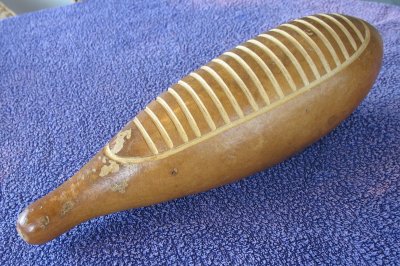
El güiro es una calabaza con muescas que se raspa con un palillo o un tenedor para producir un sonido rasposo y rítmico. Es un elemento habitual de las orquestas de charanga y ocupa un lugar central en el danzón, el cha-cha-chá, el son y la salsa.
Lees meer >Los timbales ( pailas criollas) son un par de tambores poco profundos con casco metálico montados sobre un soporte y tocados con baquetas de madera. Son el motor rítmico de las orquestas de charanga y desempeñan un papel fundamental en la timba.
Lees meer >El piano es el corazón armónico y rítmico de la música popular cubana. En la timba, es uno de los instrumentos más exigentes y expresivos del conjunto.
Lees meer >Mambo
En la música cubana, especialmente en la salsa y el son,
la sección de "mambo" generalmente se refiere a una pausa instrumental intensa y rítmicamente potente,
que a menudo presenta líneas de metales repetitivas, patrones de call-and-response y energía que va aumentando hacia el clímax de una canción.