Pianists
The pianists who shaped Cuban harmony and rhythm — from the contradanza composers of the 19th century to the masters of the modern timba tumbao.
The piano occupies a unique position in Cuban music: it bridges European harmonic tradition and African rhythmic structure, playing montunos that interlock with the clave while outlining the chord changes. These are the pianists who defined what that instrument means in Cuban music.
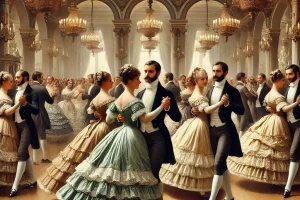
The contradanza was the first European-derived dance form to take root in Cuba and begin transforming under African influence. It is the starting point of the Cuban salon dance lineage that would eventually produce danzón, mambo, and cha-cha-chá.
Lees meer > Timba is the music this site is dedicated to exploring. It emerged as a distinct genre in the late 1980s and crystallized in the early 1990s — born in a moment of social crisis, built on the full accumulated history of Cuban music, and still evolving today.
Lees meer >
The clave is a fundamental rhythmic pattern and organizing principle in Cuban music. It serves as both a musical pattern and a guiding concept, deeply rooted in Afro-Cuban traditions.
Lees meer >The piano is the harmonic and rhythmic heart of Cuban popular music. In timba, it is one of the most demanding and expressive instruments in the ensemble.
Lees meer >The piano is the harmonic and rhythmic heart of Cuban popular music. In timba, it is one of the most demanding and expressive instruments in the ensemble.
Lees meer >A Cuban popular dance music genre that emerged in the 1980s–90s
- emerged in the 1980s–90s
- influenced by songo, rumba, funk, blues, jazz, pop, rock and Afro-Cuban rhythms.
- Known for complex rhythm shifts, aggressive bass lines, and high energy that push dancers to improvise.
Lees meer >