NG La Banda
NG La Banda — Nueva Generación — is widely credited as the band that invented timba, building an entirely new genre from songo, funk, jazz, and Afro-Cuban ritual music between 1988 and the early 1990s.
About
José Luis "El Tosco" Cortés founded NG La Banda (Nueva Generación La Banda — New Generation The Band) in Havana in 1988, after years as a flutist and composer with Irakere, Cuba's premier jazz-fusion ensemble. The move from Irakere to NG La Banda was a deliberate descent from the concert hall to the street: Cortés wanted to take the musical sophistication he had developed alongside Chucho Valdés and apply it to raw, high-energy dance music.
The formula was unprecedented. NG La Banda's rhythm section combined songo's drum vocabulary with funk-influenced bass"> electric bass lines and a locked-in, aggressive pulse that had no real precedent in Cuban music. The brass arrangements were punishing — dense, dissonant, harmonically complex in ways that reflected Cortés's conservatory training while landing with the force of a street brawl. Over this, vocalists (early on including Isaac Delgado) delivered lyrics that were explicitly about Havana street life, sexual politics, and social conditions.
The 1989–1992 recordings are the foundational timba documents. "La Expresiva," "No Se Puede Tapar El Sol," "La Bruja" — these tracks established the genre's core characteristics: the rhythmic interlocking of conga, drum set, bass, and piano each occupying distinct rhythmic roles; the use of Afro-Cuban religious references ( batá rhythms, Yoruba phrases) embedded in secular dance music; the extended mambo sections with their rapid-fire brass volleys.
NG La Banda also created a new relationship between the band and the dancer. The despelote — a style of dancing that emerged in direct response to timba's rhythmic complexity — developed on Havana dance floors in response specifically to NG La Banda's music. The band's performances were events; the dancing they provoked was controversial enough to attract government attention.
El Tosco's flute playing is a signature element. Where the flute in charanga is elegant and melodic, in NG La Banda it is aggressive, chromatic, and often used as a rhythmic weapon. His approach extended what he had developed in Irakere and gave timba one of its most distinctive timbres.
NG La Banda has operated intermittently since the 1990s, with various lineup changes, but El Tosco remains the creative center. Their influence on every subsequent timba band — Charanga Habanera, Bamboleo, Paulito FG, David Calzado's groups — is direct and acknowledged.
Key Recordings
- "La Expresiva" — early defining timba track
- "No Se Puede Tapar El Sol"
- "La Bruja"
- En la calle — foundational album
- En directo desde el patio de mi casa — landmark live recording
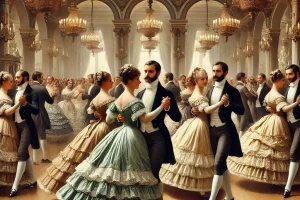
The contradanza was the first European-derived dance form to take root in Cuba and begin transforming under African influence. It is the starting point of the Cuban salon dance lineage that would eventually produce danzón, mambo, and cha-cha-chá.
Lees meer > Timba is the music this site is dedicated to exploring. It emerged as a distinct genre in the late 1980s and crystallized in the early 1990s — born in a moment of social crisis, built on the full accumulated history of Cuban music, and still evolving today.
Lees meer >Rumba is the most African-rooted of all Cuban music and dance forms — born in the streets, courtyards, and docks of Havana and Matanzas in the late 19th century, with no European instruments, no salon setting, and no pretense of European propriety.
Lees meer >Songo is the direct bridge between traditional Cuban music and timba. Developed by Los Van Van in the early 1970s, it rewired Cuban popular music by absorbing funk, rock, and jazz into the Afro-Cuban rhythmic foundation — and laid every groundwork that timba would build on.
Lees meer > Cuba is the largest island in the Caribbean and the birthplace of some of the world's most influential music and dance traditions. African, Spanish, and French cultural streams collided here over centuries of colonial history, producing an extraordinary creative culture that exported itself across the globe.
Lees meer > Nigeria — home to the Yoruba, Igbo, and Efik peoples — is the single most influential African source for Afro-Cuban religion and dance. Enslaved Yoruba brought to Cuba preserved their cosmology through Santería, and their descendants' dances remain at the core of Cuban folkloric and popular movement vocabulary today.
Lees meer > EGREM (Empresa de Grabaciones y Ediciones Musicales) is Cuba's state recording company, founded in 1964 after the Revolution nationalized all private recording labels. Its main facility, Estudios Areíto in Havana, is where virtually every important Cuban recording from the Revolution era was made.
Lees meer > Despelote is the most explosive individual dance style in timba — a full-body release of energy that happens during the high-intensity bomba sections of a timba song.
Lees meer >Egungun is the Yoruba masquerade tradition honoring the collective ancestors — the Egun, the dead who remain present and active in the lives of the living. In Cuba, the Egungun tradition survived within the broader world of Santería (Regla de Ocha) and the related Arará and Abakuá communities, though in a form shaped by the specific conditions of the island.
Lees meer >The batá drums are a set of three double-headed hourglass-shaped drums central to Yoruba religious tradition and Afro-Cuban sacred music (Lucumí / Santería).
Lees meer >The piano is the harmonic and rhythmic heart of Cuban popular music. In timba, it is one of the most demanding and expressive instruments in the ensemble.
Lees meer >The bass"> electric bass is the dominant bass instrument in timba and modern Cuban popular music, replacing the upright bass from the 1970s onward. In timba specifically, the bass"> electric bass became a lead voice — fiery, improvisational, and deeply integrated with the percussion.
Lees meer > Timba, the explosive and rhythmically rich genre of Cuban dance music, transformed how the bass functions in popular music. In Timba, the bass is not just foundational — it’s fiery, funky, and free.
Lees meer >The trombone is the defining brass voice of timba. Where earlier Cuban popular music relied primarily on trumpets, timba shifted the brass weight toward trombones — giving the music a deeper, darker, more aggressive horn sound.
Lees meer >A Cuban popular dance music genre that emerged in the 1980s–90s
- emerged in the 1980s–90s
- influenced by songo, rumba, funk, blues, jazz, pop, rock and Afro-Cuban rhythms.
- Known for complex rhythm shifts, aggressive bass lines, and high energy that push dancers to improvise.
Lees meer >Mambo
In Cuban music, especially in salsa and son,
the "mambo" section typically refers to a brassy, rhythmically intense instrumental break,
often featuring repetitive horn lines, call-and-response patterns, and building energy toward the climax of a song.
The Casa de la Trova in Santiago de Cuba is the spiritual home of Cuban traditional music — Son, Bolero, Changüí, and Trova. Founded in 1968 on Calle Heredia in the heart of Santiago's historic center, it has been the gathering place for the city's musicians for over half a century.
Lees meer >