Charanga Habanera
Charanga Habanera is one of the most commercially successful and controversial timba bands — known for their flashy choreography, provocative lyrics, and the 1997 government ban that made them famous beyond Cuba.
About
David Calzado founded Charanga Habanera in Havana in 1988, the same year José Luis Cortés founded NG La Banda. Where NG La Banda built timba from jazz sophistication and street aggression, Charanga Habanera approached the genre from a more overtly commercial angle — without sacrificing musical quality, but with a clear eye on spectacle, presentation, and accessibility.
The band's presentation was a key part of their identity from early on. Elaborate choreography, matching outfits, showmanship — Charanga Habanera brought a visual dimension to timba that made them natural candidates for international touring and television. Their rhythmic approach was fully timba: the interlocked rhythms, the brass density, the songo-derived drum vocabulary — but the aesthetic was polished rather than raw.
The lyrics were another matter. Charanga Habanera's songs addressed sexuality, street life, and social tensions in Havana with an explicitness that pushed against the limits of what Cuban authorities found acceptable. The tension came to a head in 1997 when the band was temporarily banned by Cuban authorities following a youth concert at the Palacio de la Salsa, where their performance was deemed "immoral." The ban lasted several months.
The effect was paradoxical. Rather than silencing Charanga Habanera, the ban amplified their fame both inside Cuba and internationally. They became emblematic of the tension between timba's street energy and official Cuban cultural policy — a tension that had been present since NG La Banda's despelote-inducing performances but that crystallized around this incident. When the ban was lifted, the band returned stronger than before.
Charanga Habanera was central to timba's international expansion in the late 1990s. Their recordings circulated widely in Europe — particularly in Spain, France, and Scandinavia, where Cuban dance communities were growing rapidly — and their touring helped establish the live timba circuit that supported the genre through the 2000s.
David Calzado has maintained the band through extensive personnel changes; Charanga Habanera functions partly as a name brand and partly as a rotating ensemble built around Calzado's vision and production approach.
Key Recordings
- "El Temba" — one of their most famous and controversial songs
- "Pa' Que Se Entere La Habana"
- Hey You, Loca! — 1990s album that reached international dance communities
- Tremendo Delirio — late 1990s recording
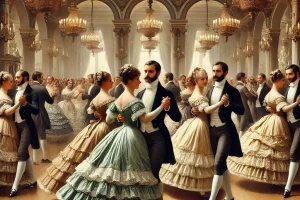
The contradanza was the first European-derived dance form to take root in Cuba and begin transforming under African influence. It is the starting point of the Cuban salon dance lineage that would eventually produce danzón, mambo, and cha-cha-chá.
Lees meer > Timba is the music this site is dedicated to exploring. It emerged as a distinct genre in the late 1980s and crystallized in the early 1990s — born in a moment of social crisis, built on the full accumulated history of Cuban music, and still evolving today.
Lees meer >Rumba is the most African-rooted of all Cuban music and dance forms — born in the streets, courtyards, and docks of Havana and Matanzas in the late 19th century, with no European instruments, no salon setting, and no pretense of European propriety.
Lees meer > Cuba is the largest island in the Caribbean and the birthplace of some of the world's most influential music and dance traditions. African, Spanish, and French cultural streams collided here over centuries of colonial history, producing an extraordinary creative culture that exported itself across the globe.
Lees meer >European cultural influence on Cuba came primarily through Spain (as colonial power) and France (through the Haitian migration and Caribbean trade). These influences shaped Cuban music's harmonic language, instrumentation, and dance forms.
Lees meer > France's influence on Cuban music arrived primarily through the Caribbean colonial world and the Haitian migration. Its impact on Cuban dance history is substantial — the entire lineage from Contradanza to Cha-cha-chá passes through French culture.
Lees meer > Spain colonized Cuba from 1492 to 1898, fundamentally shaping its language, religion, harmonic music traditions, and social structure. Spanish musical culture forms one of the two primary roots — alongside African traditions — of virtually all Cuban music.
Lees meer > EGREM (Empresa de Grabaciones y Ediciones Musicales) is Cuba's state recording company, founded in 1964 after the Revolution nationalized all private recording labels. Its main facility, Estudios Areíto in Havana, is where virtually every important Cuban recording from the Revolution era was made.
Lees meer >The trombone is the defining brass voice of timba. Where earlier Cuban popular music relied primarily on trumpets, timba shifted the brass weight toward trombones — giving the music a deeper, darker, more aggressive horn sound.
Lees meer >A Cuban popular dance music genre that emerged in the 1980s–90s
- emerged in the 1980s–90s
- influenced by songo, rumba, funk, blues, jazz, pop, rock and Afro-Cuban rhythms.
- Known for complex rhythm shifts, aggressive bass lines, and high energy that push dancers to improvise.
Lees meer >